Shafts with Cross Holes
Rotational shafts requiring side holes, slots, flats, or milled reference surfaces.
Precision CNC Machining Services
Turn-mill machining combines turning and milling in one coordinated process. It is suitable for rotational parts that also include cross holes, flats, slots, side features, off-center holes, milled surfaces, or multiple machining orientations.
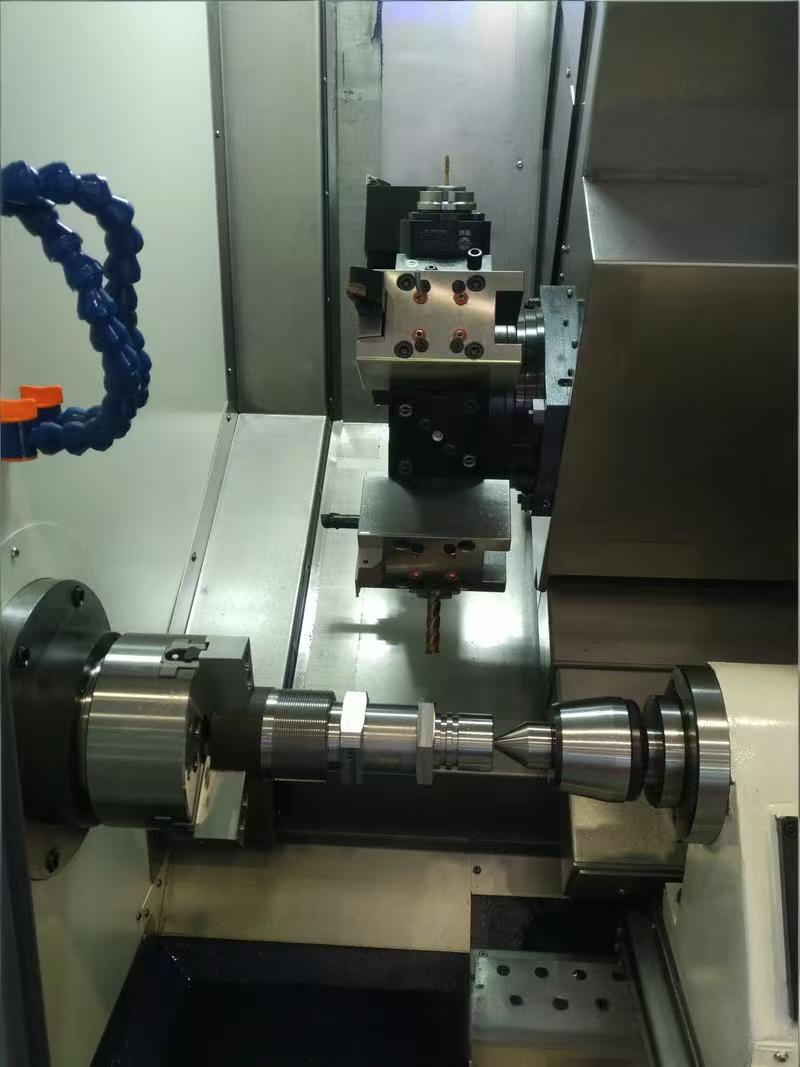
Turning and milling features can be completed with fewer fixture changes when the part structure allows it.
Reducing repeated clamping helps control the relationship between turned diameters and milled features.
Suitable for shafts or fittings that also need cross holes, flats, slots, or side machining.
Less movement between machines can reduce accumulated positioning error and handling risk.
Typical part types depend on the drawing, material, tolerance, surface finish, quantity, and assembly requirements.
Rotational shafts requiring side holes, slots, flats, or milled reference surfaces.
Round fittings, adapters, connector bodies, and couplings with multiple side features.
Parts where turned diameters and milled features must maintain positional relationship.
Before production, the drawing, CAD model, material, tolerance, surface finish, and inspection points should be reviewed together.
| Review Item | Why It Matters | Typical Check Points |
|---|---|---|
| Turned + Milled Features | The process is useful when a part includes both cylindrical and non-cylindrical features. | Diameters, flats, side holes, slots, grooves, cross features. |
| Datum Relationship | Turn-mill helps keep related features in one coordinated setup strategy. | Concentricity, perpendicularity, hole-to-diameter position, face alignment. |
| Part Complexity | More complex features may require process planning before quotation. | Tool access, live tooling, sub-spindle needs, fixture method. |
| Production Quantity | Turn-mill can be useful for repeatable parts where setup reduction matters. | Prototype, low-volume, batch production, repeat orders. |
Send your CAD file, drawing, material requirement, quantity range, tolerance notes, and surface finishing needs. EASEMFG can review the process route and suggest a practical machining approach.
Request a Quote