Die Casting Support for Aluminum Alloy Housings, Covers, Brackets, and Cast Components
EASEMFG supports die casting project review for aluminum alloy parts that require cast structures, tooling evaluation, CNC post-machining, surface finishing, and dimensional inspection. Die casting is suitable when the design is stable and the project requires repeatable metal components.
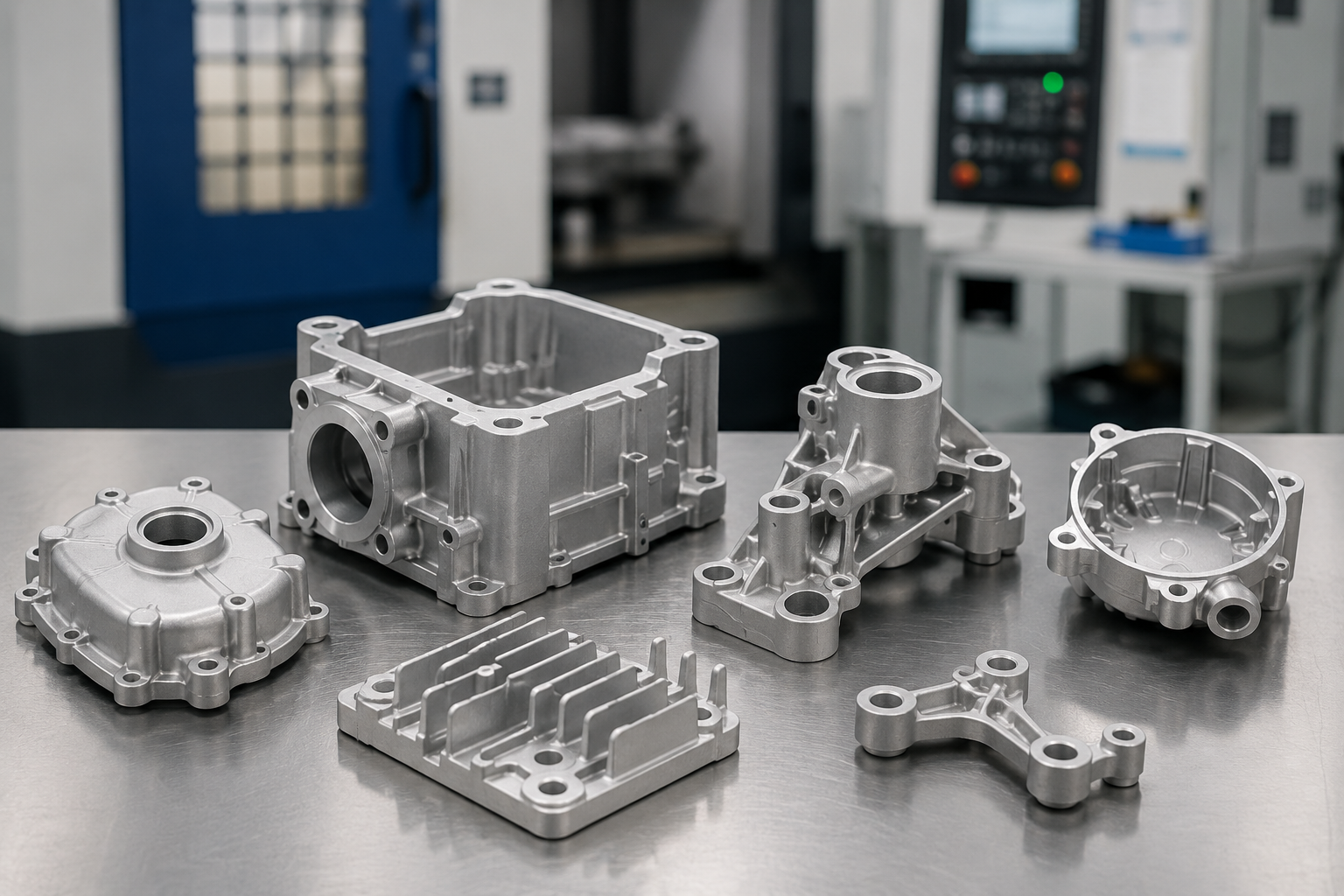
When Die Casting Support Is Useful
Repeatable Metal Parts
Used when the part design is stable and repeated aluminum alloy production is required.
Cast Housings
Suitable for housings, covers, brackets, heat sink structures, ribs, bosses, and mounting features.
Post-Machining
Critical holes, threads, sealing faces, and assembly interfaces may need CNC machining after casting.
Surface Finishing
Deburring, blasting, coating, polishing, or other finishing can be reviewed according to application.
Die Casting Advantages for Manufacturing Projects
Die casting is most useful when the product design is stable, the part has repeated production demand, and the structure includes cast-friendly housing features, ribs, bosses, mounting points, or integrated functional shapes.
Repeatable Part Structure
Once the mold and process are confirmed, die casting is suitable for repeated aluminum alloy parts with consistent housing shape, mounting features, and overall structure.
Integrated Cast Features
Ribs, bosses, mounting columns, covers, thin-wall shell areas, and heat dissipation structures can be considered during casting design instead of machining the entire shape from solid stock.
CNC Post-Machining Control
Critical holes, threads, sealing surfaces, bearing seats, and assembly interfaces can be finished by CNC machining after casting to meet functional requirements.
Typical Die Casting Parts
Die casting support is mainly used for metal components where casting structure, machining allowance, tooling, and finishing need to be reviewed together.
Aluminum Housings
Equipment housings, motor covers, gearbox-style cases, electronic enclosures, and structural cast shells.
Brackets and Mounting Parts
Cast brackets, mounting frames, support arms, adapter parts, and structures with bosses or ribs.
Heat Sink and Functional Parts
Heat sink bodies, ribbed components, cast covers, and components needing machined interfaces.
Die Casting Project Review Focus
Before quotation, die casting projects should be reviewed for tooling feasibility, wall thickness, draft angle, machining allowance, surface requirements, and inspection points.
| Review Item | Why It Matters | Typical Check Points |
|---|---|---|
| Part Geometry | Die casting requires suitable structure for filling, release, shrinkage, and repeatability. | Wall thickness, ribs, bosses, draft angle, fillets, undercuts, parting line. |
| Tooling Requirement | Tooling affects cost, lead time, surface quality, and production repeatability. | Mold structure, parting direction, ejector marks, cavity layout, expected quantity. |
| Post-Machining | Cast parts often need CNC machining for critical surfaces, holes, threads, and sealing areas. | Machining allowance, datum surfaces, hole positions, thread areas, mating faces. |
| Surface and Inspection | Surface finish and inspection requirements should match the final application. | Deburring, blasting, coating, polishing, cosmetic surfaces, dimensional inspection. |
Need a Die Casting Project Review?
Send your CAD file, 2D drawing, material requirement, quantity range, surface finishing needs, and critical machining areas. EASEMFG can review whether die casting, CNC machining, or a combined manufacturing route is more suitable.
Request a Quote